At a glance: A commercial HVAC service contract in South Florida should list every covered unit, set task lists and visit frequencies against ASHRAE/ACCA Standard 180, define response and resolution times by priority, price repairs with an approval limit, and assign the refrigerant leak-repair duties EPA has required of owners since January 1, 2026. This guide compares the four contract types, explains what drives price, covers occupied-building and roof terms, and ends with a checklist assigned by role.
A commercial HVAC service contract South Florida owners can enforce names every piece of equipment it covers, defines response in hours by priority, assigns refrigerant leak-repair duties in writing, and requires reports a property manager can hand to an owner. Agreements that promise routine maintenance and priority service without those terms leave the building paying for visits nobody can check, repairs billed outside the contract, and, since January 1, 2026, federal refrigerant obligations that fall on the owner whether or not the contractor tracks them. The cost of a weak agreement is a chiller or rooftop unit that fails in August while the contract is technically being honored. This article sets out the terms a facility or property manager should require before signing or renewing. It is not legal advice and offers no contract language for any specific building; the final agreement belongs with the owner’s attorney.
Why does a commercial HVAC service contract need new terms in 2026?
A maintenance agreement written before 2026 is likely missing refrigerant terms that federal rules now require someone to perform. EPA’s January 2026 fact sheet on leak repair requirements under the Emissions Reduction and Reclamation (ER&R) rule states that, beginning January 1, 2026, owners or operators of appliances with a charge of 15 pounds or more of a refrigerant containing an HFC, or certain HFC substitutes with a global warming potential above 53, must comply with leak repair requirements. The same fact sheet places the residential and light commercial air-conditioning and heat pump subsector outside these requirements, while chillers and certain variable refrigerant flow (VRF) systems fall under their own subsectors. For a comfort-cooling appliance, a leak rate above 10 percent requires repair within 30 days of the refrigerant addition, followed by verification tests, and EPA’s reporting resources for the rule list the reports an owner may have to submit along the way.
The obligation sits with the owner or operator. A technician adds the refrigerant, but the leak-rate calculation, the repair deadline, the records, and any report to EPA are the owner’s to answer for, so each step needs a named party in the contract.
The second reason is older and still common. The U.S. Department of Energy’s Federal Energy Management Program (FEMP), in its Operations and Maintenance Best Practices Guide (Release 3.0, August 2010), cautions that boilerplate service contracts without site-specific detail are open to contractor interpretation, often to the owner’s disadvantage. The same guide cites a 1999 estimate that maintenance programs targeting energy efficiency can save 5 to 20 percent on energy bills without significant capital investment; the result for any building depends on its starting condition.
What goes wrong in the building under a vague maintenance agreement?
A vague agreement fails through the gap between what the contractor must do and what the building needs. In South Florida, where equipment runs long hours in humid, salt-laden air, the gap shows up in four places. Coil cleaning is the clearest example. FEMP’s guide notes that a building in a dirty environment may need outdoor coils cleaned two or three times in a cooling season instead of once, so a contract that says annual coil cleaning can be fully honored while condenser coils foul and cooling capacity drops. Coastal buildings add salt-air corrosion on commercial HVAC equipment, which goes unreported unless the agreement asks for it.
Drainage is the second gap. A clogged condensate line can overflow into a ceiling or onto the roof long before a quarterly visit, which is why commercial HVAC condensate drain problems belong in the scope with a stated inspection interval. Humidity is the third. EPA’s mold course guidance on building humidity recommends keeping indoor relative humidity below 60 percent, ideally between 30 and 50 percent, and an agreement that records only supply-air temperature will not show a building drifting above that range.
| Contract gap | What happens in the building | Clause that closes it |
|---|---|---|
| Routine maintenance with no task list | Visits shrink to filters and a visual check | Task list per equipment type, with ASHRAE/ACCA Standard 180 as the minimum |
| Annual coil cleaning only | Fouled condenser coils, high head pressure, lost summer capacity | Coil cleaning frequency set by exposure, with before-and-after photos |
| No drain inspection interval | Overflowing pans, stained ceiling tile, water on roofing | Drain line, pan, and overflow switch checked at every visit |
| Repairs at standard rates | Unbudgeted invoices with no cap or approval step | Rate schedule, parts markup, and approval threshold in writing |
| No reporting requirement | Owner cannot verify visits or trend failures | Visit report within a set number of days, with readings and photos |
| No refrigerant terms | Leak-rate calculations and records missing where EPA rules apply | Refrigerant log per appliance and records retained three years |
ANSI/ASHRAE/ACCA Standard 180, summarized on DOE’s Better Buildings Solution Center, establishes minimum HVAC inspection and maintenance requirements intended to preserve thermal comfort, energy efficiency, and indoor air quality in commercial buildings. Naming it as the baseline gives both parties an outside reference for what maintenance means, so the task list is something to measure against.
Which commercial AC maintenance contract type fits the building?
Commercial AC maintenance contracts fall into four types, and FEMP’s guide, drawing on a Portland Energy Conservation, Inc. study, describes how each moves risk between owner and contractor. The type sets who pays when equipment fails, so it should be chosen before the task list is negotiated.
| Contract type | What it covers | Who carries the risk | Where it falls short |
|---|---|---|---|
| Full coverage | Labor, parts, materials, emergency service, and comprehensive preventive maintenance | Mostly the contractor | Highest short-term cost; an underbid contractor may do minimal maintenance or try to exit before a major failure |
| Full labor | All labor; owner buys parts and equipment | Shared | Harder to budget for small and mid-size buildings; usually suits large portfolios that buy parts in bulk |
| Preventive maintenance | Scheduled tasks for a fixed fee; materials usually included | Mostly the owner | Repairs and emergencies often billed as time and materials; too much or too little maintenance if frequencies are not set |
| Inspection | A fixed number of inspections and minor tasks | The owner | Least rigorous; FEMP describes it as possibly the least effective, suited to small buildings with simple systems |
No contract type is right for every building. A full-coverage agreement on an aging chiller plant shifts real risk to the contractor and is priced to match, while the same agreement on two new split systems pays for protection the equipment warranty already provides. Advanced Air Systems’ preventive maintenance program lists coil cleaning, filter replacement, drain line cleaning, and lubrication of mechanical components among its services, and central plants are covered through its chiller and cooling tower services.
A contractor organized around multi-unit, occupied commercial buildings is not the right fit for every agreement. A small office with one or two simple systems may be well served by a smaller local contractor on an inspection or basic maintenance agreement. A contract also cannot make end-of-life equipment reliable, so the decision about when repair stops paying and replacement makes sense should be made before the contract term is set.
What should an HVAC service level agreement define, and what drives its price?
An HVAC service level agreement converts priority service into targets the owner can check: how fast a qualified technician responds, how fast the problem is resolved or made safe, and how the contractor proves both. Response ends when a technician is on site, and resolution ends when the equipment is back in service or a temporary measure is in place. Each clock should be set by priority tier, with tiers tied to the building’s actual risk, so a server room or medical suite sits above a single office zone. The agreement should also define after-hours, what counts as an emergency, and what happens when a target is missed. FEMP’s guide lists benchmarks, drawn from NASA’s 2000 guidance, of preventive maintenance completion above 90 percent and emergency work below 10 percent of maintenance hours, which make reasonable reporting metrics.
| Price driver | Why it moves the price | How to state it in the agreement |
|---|---|---|
| Equipment count and type | Chillers, cooling towers, and VRF systems take more labor and specialized skill than packaged units | Equipment schedule listing location, capacity, refrigerant, charge, and age per unit |
| Run hours and occupancy | Equipment running most of the year needs more frequent filter and coil service | Visit frequency set per equipment type |
| Coastal exposure | Salt air accelerates coil and cabinet corrosion | Coil cleaning and corrosion inspection interval by location |
| Response tier | Shorter guaranteed response requires on-call staffing | Priority tiers with response and resolution targets in hours |
| Parts and refrigerant coverage | Moves repair cost risk from owner to contractor | Included parts, exclusions, and refrigerant pricing basis |
| After-hours work and access limits | Night work and escorted roof access add labor | Defined service windows and access procedure |
Advanced Air Systems does not publish pricing, and published per-square-foot ranges for maintenance contracts rarely state their assumptions. Ask each bidder to price the same equipment schedule and the same tiers, so proposals compare on scope.
What changes when the building stays occupied during service?
In an occupied building, the service agreement doubles as an access and communication plan. Rooftop units, air handlers above tenant ceilings, and chillers in a central plant are reached through spaces people are using, so the contract should say who grants access, how much notice tenants receive before a shutdown, and which zones cannot lose cooling during business hours. Server rooms and similar spaces need a stated temporary-cooling plan for planned outages.
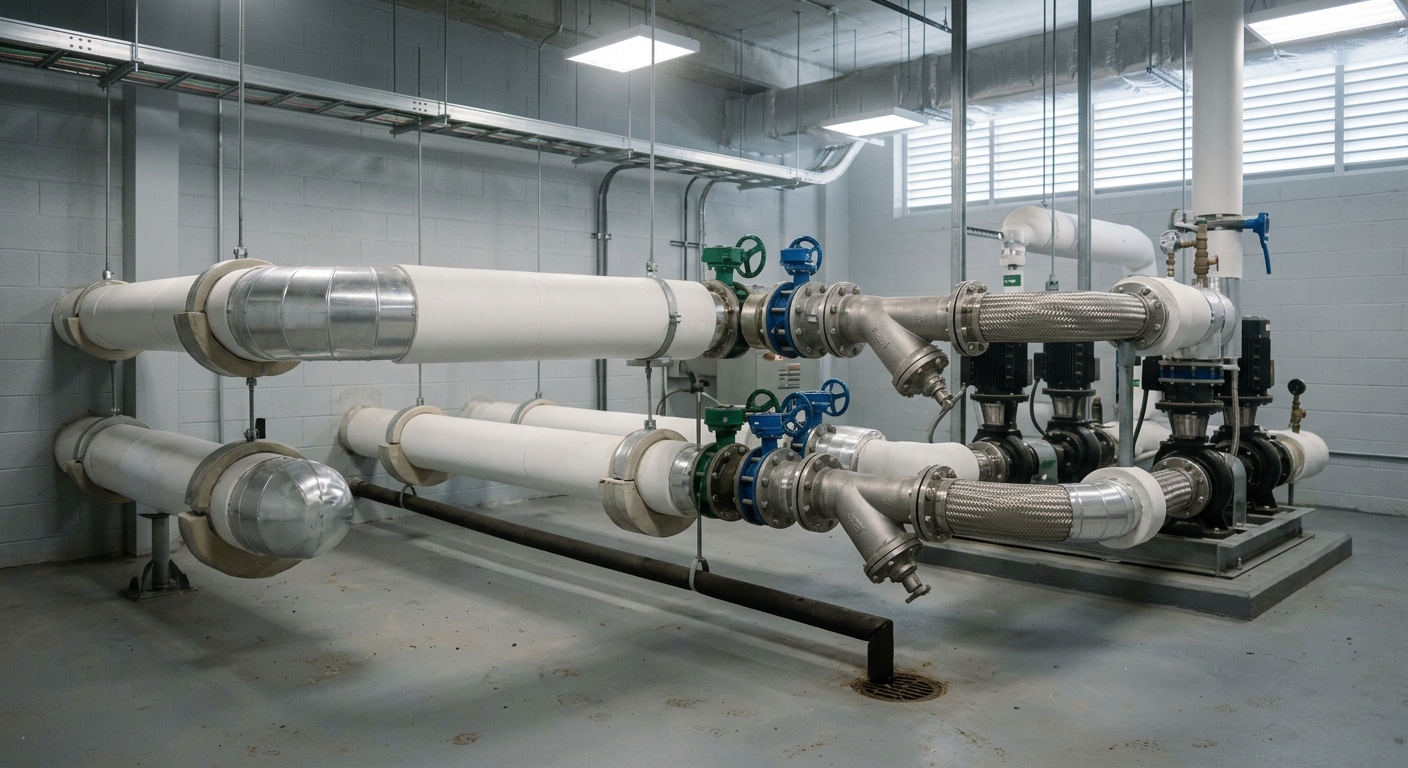
The roof is part of the HVAC scope even when nobody writes it down. Technicians cross the membrane, remove access panels, and service condensate lines that can drain onto roofing, and roof warranties generally depend on the roof being maintained. Advanced Roofing’s preventive roof maintenance program covers the roof’s own schedule; the HVAC agreement should require technicians to use walkway pads, replace panels and fasteners, and report roof damage they find at the equipment. Advanced Air Systems is a division of Advanced Roofing Inc., which lets one company coordinate curbs, flashing, and equipment work; the owner should still confirm who holds each warranty.
Storm terms belong in the agreement as well. A clause for securing loose panels and checking tie-downs before a named storm, then inspecting equipment and drains afterward, gives the property manager a defined response when every building in the county is calling at once. No agreement makes rooftop equipment storm-proof; the clause sets who inspects and how fast, and any damage determination goes to the owner’s insurer and engineer.
Which EPA and Florida requirements should the agreement assign?
As of October 2026, three regulatory items belong in a commercial HVAC service agreement, each assigned to a named party. The first is EPA’s leak repair rule. For covered comfort-cooling appliances, the agreement should state who calculates the leak rate each time refrigerant is added, who completes the repair and both verification tests within the 30-day window, who performs the annual leak inspections EPA requires after an exceedance, and where records are kept for the three years EPA’s fact sheet specifies. Appliances that leak 125 percent or more of their full charge in a calendar year must be reported to EPA by March 1 of the following year, so year-end refrigerant totals per appliance belong in the contractor’s reporting.
The second is EPA’s Section 608 technician certification requirements, under which anyone who attaches gauges to, adds refrigerant to, or removes refrigerant from an appliance must be certified; the agreement can require proof of certification for assigned technicians. The third is licensing. Confirm the contractor’s Florida license status on the Department of Business and Professional Regulation’s license verification portal before signing and at each renewal. EPA proposed a narrow amendment to the leak repair provisions in May 2026, so the agreement should reference the regulation rather than restate it. Which subsector each appliance falls in is a question for the owner’s environmental counsel.
Commercial HVAC service contract South Florida checklist: who owns each term?
A commercial HVAC service contract for a South Florida building should include a unit-by-unit equipment schedule, task lists and visit frequencies, response and resolution times by priority, repair pricing and approval limits, refrigerant leak-rate and recordkeeping duties under EPA rules, roof access procedures, storm terms, reporting deadlines, and renewal and termination terms.
- Property or facility manager: Build the equipment schedule with location, capacity, refrigerant, charge, and age for every unit, and attach it as an exhibit, because coverage disputes start with equipment nobody listed.
- Owner or asset manager: Choose the contract type and set the repair amount the manager can approve without a second signature.
- HVAC contractor: Propose task lists and visit frequencies per equipment type, with Standard 180 as the minimum and coastal coil cleaning stated separately.
- HVAC contractor: State response and resolution targets in hours for each priority tier.
- Owner and HVAC contractor together: Assign every EPA leak-repair step, the refrigerant log, and the location of three years of records.
- Roofing contractor or roof consultant: Confirm roof access rules and walkway requirements so HVAC service does not put the roof warranty at risk.
- Facility manager: Where the agreement includes replacements or retrofits, require functional testing before acceptance, as covered in commissioning after a retrofit.
- Property manager: Require visit reports within a set number of days, with readings, photos, and open deficiencies, and track preventive maintenance completion against them.
- Owner’s attorney: Review term, renewal, termination for nonperformance, insurance, indemnity, and handover of records at exit. The questions in how to select a commercial HVAC contractor help compare the bidders themselves.
Frequently Asked Questions
What is the difference between an HVAC service agreement and an HVAC service level agreement?
A service agreement defines what work the contractor performs, on which equipment, and how often. A service level agreement, often an exhibit within it, defines measurable performance: response and resolution times by priority, reporting deadlines, and what happens when a target is missed. A commercial building usually needs both, because a task list without service levels gives the owner no way to measure emergency performance.
How often should commercial HVAC equipment be serviced in South Florida?
Frequency depends on equipment type, run hours, and exposure. ASHRAE/ACCA Standard 180 sets minimum inspection and maintenance tasks, and FEMP’s guide notes that coils in dirty environments may need cleaning two or three times per cooling season. Ask the contractor to justify each visit interval against the manufacturer’s recommendations and the building’s operating hours, with chillers and cooling towers on their own schedules.
Does EPA’s leak repair rule apply to commercial rooftop units?
It depends on the refrigerant charge and the equipment’s subsector. EPA’s leak repair requirements apply to appliances holding 15 pounds or more of an HFC-containing refrigerant, but the residential and light commercial air-conditioning and heat pump subsector is exempt, while chillers and certain VRF systems are covered under their own subsectors. List each unit’s charge and refrigerant, and have environmental counsel confirm which units are covered.
Should a commercial AC maintenance contract include repairs?
It can, at a price. Full-coverage agreements include parts and labor and move repair risk to the contractor, while preventive maintenance agreements usually bill repairs separately. Either way, write down the labor rates, parts markup, after-hours rates, and the dollar amount the property manager can approve without owner sign-off, so repair invoices arrive against terms everyone has already accepted.
What reports should an HVAC contractor provide under a service contract?
Each visit should produce a report listing the equipment serviced, tasks completed, operating readings, photos of conditions found, and open deficiencies with a recommended action. Monthly or quarterly summaries should track preventive maintenance completion, emergency calls, response times against the agreement, and refrigerant added per appliance, which supports EPA leak-rate calculations where the rule applies.
An agreement the property manager can verify
A service agreement protects a building only as far as its terms can be checked. The equipment schedule fixes what is covered, the task lists and the Standard 180 baseline fix what maintenance means, the service levels fix how fast help arrives, and the refrigerant terms assign obligations EPA has placed on owners since January 2026. For South Florida buildings, coil cleaning frequency, drain inspection, roof access, and storm response belong in writing as well. Those terms let a property manager compare proposals on one scope. Local service details are on the commercial HVAC repair in Miami and commercial HVAC contractor in Fort Lauderdale pages.
Written by The Technical Team at Advanced Air Systems. Established in 1994, Advanced Air Systems is 100% employee-owned and a division of Advanced Roofing Inc.
To review a current agreement or price a new one for your equipment, request a free quote or call (954) 332-1418.